Finding Strength in Unexpected Places: What Having a Disability Taught Me About Resilience
As a therapist, I spend much of my time helping others recognize their strengths, navigate challenges, and find hope during the difficult seasons of life. Yet some of the most important lessons I've learned about resilience have not come from my professional training, but from my personal experiences living with Myasthenia Gravis.
For those unfamiliar with it, Myasthenia Gravis is a chronic autoimmune disorder that affects communication between nerves and muscles, often causing weakness and fatigue. Physical symptoms can vary from person to person. One thing is consistent: it has a way of reminding you that your body may not always cooperate with your plans.
My personal journey with MG brought a multitude of challenges. It means that I can only walk a limited amount before having to sit down. If I get sick, it means I may have struggles even getting out of bed. As a teenager, I had to face my share of ridicule and bullying because of my awkward walk. It meant having a parent who didn’t believe I would be able to keep a job or even drive a car. Well, look at me now: working in a career I love and driving all over the place. Medication and giving myself space to rest when I need it have helped, but I still face daily challenges. Like many people with a disability, I initially found myself measuring my worth by what I could accomplish. Could I keep up with my responsibilities?
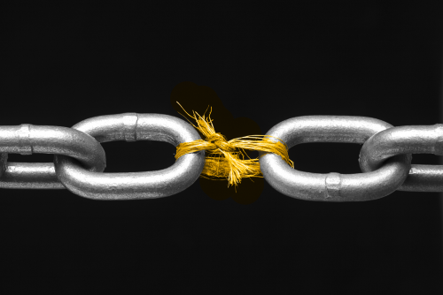
Could I maintain the same pace I always had? Could I push through exhaustion and continue performing as though nothing had changed?
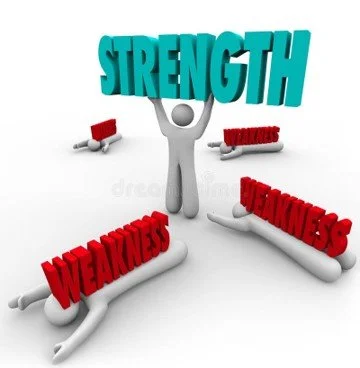
Over time, I learned that strength isn't always found in pushing harder.
Sometimes strength looks like acknowledging limitations.
Sometimes it means resting when your mind insists you should keep going.
Sometimes it means accepting help from others when independence has always been a point of pride.
And sometimes it means grieving the version of yourself you thought you would be while making room for the person you are becoming.
One of the frameworks that has helped me make sense of this journey is Internal Family Systems (IFS), a model that suggests we all have different "parts" within us that carry emotions, beliefs, and protective roles.
Living with Myasthenia Gravis introduced me to many of my own parts.
There is a striving part that wants to prove I can do everything I used to do. It pushes me to keep going even when my body is asking for rest. This part fears that slowing down means weakness or failure.
There is an anxious part that worries about symptoms, uncertainty, and what the future might hold. It wants guarantees that no one can truly provide.
There is a frustrated part that grieves the unpredictability of living with MG and how getting older has forced me to go even slower. It remembers how things used to be and wishes things could go back to how they once were.
For a long time, these parts felt like they conflicted with one another. The harder one part pushed, the more exhausted I became. The more another part worried, the more overwhelmed I felt.
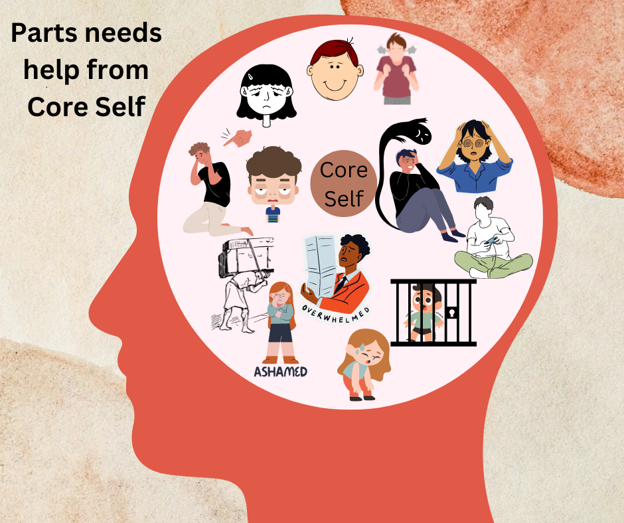
IFS taught me something important: these parts were not my enemies. They were trying to help.
The striving part was trying to protect me from feeling incapable. The anxious part was trying to keep me prepared. The frustrated part was carrying the pain of loss.
What changed wasn't the existence of these parts. What changed was my relationship with them.
Rather than fighting them, I began learning to listen. I became curious about what they feared and what they needed. I started approaching myself with compassion instead of criticism.
IFS calls this compassionate, grounded presence the Self—the core within each of us that possesses qualities such as calmness, curiosity, courage, compassion, confidence, creativity, and connectedness.
Living with MG challenged many assumptions I held about resilience. I once viewed resilience as the ability to endure anything without slowing down. Now I understand it differently. Resilience is not the absence of struggle. It is the willingness to continue moving forward while honoring the reality of your struggle.
MG has challenged me physically, but it has also invited me to trust Self energy more deeply. On difficult days, when symptoms flare or plans change unexpectedly, I am reminded that I am more than my fears, frustrations, or limitations. I can acknowledge those parts without becoming consumed by them.

This perspective has transformed how I understand strength.
Strength is not silencing the part that is afraid.
Strength is not forcing the exhausted part to keep going.
Strength is not pretending grief doesn't exist.
Strength is creating enough space for all those parts while remaining connected to the deeper wisdom within ourselves.
There have been days when frustration, fear, and uncertainty felt overwhelming. Chronic illness often comes with unanswered questions and unpredictable moments. Yet those experiences have also deepened my appreciation for self-compassion.
In therapy, I often encourage clients to speak to themselves with the same kindness they would offer a loved one. Living with MG has required me to practice that lesson myself. I've had to learn that self-worth is not dependent on productivity, and that needing rest does not mean failing.
Perhaps one of the greatest gifts hidden within this challenge has been empathy. My experience has given me a deeper understanding of what it feels like when life doesn't go according to plan. It has reminded me that many people carry invisible burdens that others cannot see.
When clients sit across from me and describe feeling discouraged, exhausted, anxious, or uncertain about their future, I understand on a more personal level that healing is rarely a straight line. Progress often comes in small, quiet moments that are easy to overlook.
Ironically, some of the moments when I have felt physically weakest have been the moments when I discovered the greatest internal strength. Not because the struggle disappeared, but because I learned that resilience comes from meeting ourselves with compassion amid that struggle.
Living with MG has not been a journey I would have chosen. Yet it has taught me valuable lessons about patience, humility, perseverance, and compassion. More importantly, it has shown me that strength is not found in never struggling; strength is found in continuing to show up for life while staying connected to ourselves, even when things are difficult.
If you are facing your own challenge: whether it's a chronic illness, anxiety, grief, relationship struggles, or another difficult season of this ride we call life, I hope you'll remember this: strength does not require perfection. You do not have to conquer every obstacle alone. You do not have to eliminate every fearful, frustrated, or exhausted part of yourself before you can move forward.
Sometimes the strongest thing you can do is acknowledge where you are, approach yourself with curiosity and compassion, accept support, and take the next step forward.
The challenges we face often change us. But they can also reveal strengths we never knew we had.
Myasthenia Gravis has certainly challenged me. It has also introduced me to parts of myself I might never have met otherwise, and in doing so, helped me discover a deeper resilience that continues to guide both my personal life and my work as a therapist. I contain multitudes, and I look forward to the continuing journey of getting to know all those parts of me.